Monthly Archives: January 2012

How to lucid dream – and fast!

Posted on

This is easy. I want more.

Over the next week I’m going to do some exercises that should aid me in lucid dreaming. Lucid dreaming occurs when you’re aware you’re dreaming and can exert some control over this alternate reality. It’s a technique much admired by new agers, lovers of hallucinogens, and fans of Avatar and The Matrix. (Not to be confused with astral projection, which is an out of body experience brought on by meditation and/or psychedelic drugs.) Even though the Skeptic’s Dictionary has a pop at lucid dreaming, there have been plenty of clinical trials and scientific bumf that back up the concept.

Benefits of lucid dreaming:

Face fears safely; improve problem-solving skills; fly to cool places; try out conversations that might not go very well; rehearse public speaking in front of an audience; practise brain surgery (or whatever it is you do); ask questions of your unconscious mind, which is infinitely wiser than your critical mind (the critical mind constructed the person you believe yourself to be and is responsible for you buying into your own legend/feeling intense self-loathing. Thus you want to transcend it whenever possible).

The three types of lucid dreaming:

DILD (dream induced lucid dream), in which the dreamer suddenly realises they’re asleep; WILD (wake induced lucid dream), in which you go directly from being awake to being asleep but aware you are dreaming; and MILD (mnemonically induced lucid dream), in which the dreamer carries out reality checks to ascertain whether or not they are asleep.

Exercises to aid lucid dreaming:

* Use your alarm to wake up after five hours, get out of bed, then back in. Hopefully you’ll slip straight back into REM sleep – this is the WILD technique.

* Alternatively, aim for a long stint of sleep and use the snooze button to keep slipping in and out of hypnopompic (awakening) and hypnagogic (falling asleep) states. This won’t last as long as lucid dreaming in the REM state, but it’s surreal, semi-controllable, and good practise.

* Use the Hypnagogic Imagery Technique (HIT) when falling asleep by trying to stay thoughtless, letting images flow past without focusing on them and being passively drawn into the dream while trying to stay aware. A bit like watching telly in a trance.

* Write your dreams down the moment you wake up, building what you remember up to a few pages over a few weeks. This is to become accustomed to your dreamland terrain and aid the DILD technique.

* Buy an REM Dreamer Device. I cannot vouch for this.

* ‘Lifestyle designer’ Tim Ferris suggests trying melatonin, nicotine patches or ‘brain booster’ Huperzine A. Others suggest caffeine. ‘Cap’n Weird Beard’ on psychoactive drug forum Erowid suggests Valerian, Passion Flower, Kava and Holy Basil. I cannot vouch for Cap’n Weird Beard.

* Identify cues that you frequently see in dreams and carry out reality checks. Get in the habit of asking yourself if you’re dreaming when you see them in real life, even when you’re pretty sure you’re awake. This is the MILD technique.

My cues              Question                                                  Answer             Dreaming?
Water                     Is it forming a tidal wave?                        Yes                        Yes
Elevator                 Am I pinned to the ceiling?                      Yes                        Yes
Vodka                     Have I just noticed I’m drinking it?       Yes                        Yes
My reflection        Do I have a pink bob?                                Yes                        Yes
Having sex            Is it with a woman?                                    Yes                        Yes

Nighty-night, then!

A fake shaman discovers his sham does heal after all

Posted on

Quesalid, one hopes.

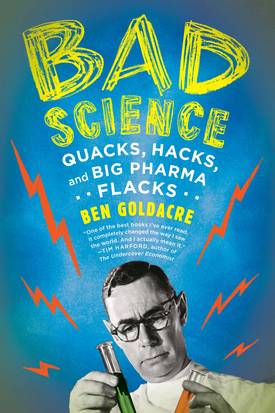
Continuing with the theme that unverifiable new age healing activities may be good for us after all, merely by instilling us with a powerful psychological sense of well-being, here’s an extract from Ben Goldacre’s book Bad Science, in a chapter about the placebo effect.

Around a hundred years ago, there was a native Canadian Indian called Quesalid…

“Quesalid was a skeptic: he thought shamanism was bunk, that it only worked through belief, and he went undercover to investigate this idea. He found a shaman who was willing to take him on, and learned all the tricks of the trade, including the classic performance piece where the healer hides a tuft of down in the corner of his mouth and then, sucking and heaving, right at the peak of his healing ritual, brings it up, covered in blood from where he has discreetly bitten his lip, and solemnly presents it to the onlookers as a pathological specimen, extracted from the body of the afflicted patient.

Quesalid had proof of the fakery, he knew the trick as an insider, and was all set to expose those who carried it out; but as part of his training he had to do a bit of clinical work, and he was summoned by a family ‘who had dreamed of him as their saviour’ to see a patient in distress. He did the trick with the tuft, and was appalled, humbled and amazed to find that his patient got better.

Although he continued to maintain a healthy skepticism about most of his colleagues, Quesalid, to his own surprise perhaps, went on to have a long and productive career as a healer and shaman.”

I’ve got a few shamanic Snake Oil Skeptic activities lined up, and I’m curious as to whether I’ll view them in the same light as new age activities thus far. (That light being dim.) Anthropologists, including Claude Lévi-Strauss, came to view shamans as tribal psychoanalysts, rather than mentally ill savages as had been the common perception.

I’ve ordered this well regarded tome about psychological healing and the role of the shaman (along with holistic therapy and contemporary psychotherapy) – Persuasion & Healing by Jerome D Frank and Julia B Frank – in the hope of learning more about how the unconscious mind responds to ‘healing’ and manifests well-being in the body. Because I like hooking me up some of that.

Homeopaths threaten journalist with bodily harm (diluted by a squillion)

Posted on

Ben Goldacre.

Ben Goldacre is the Lord Flashheart of science journalism, lancing the boil of pseudoscience and fashioning meaningless hyperbole into a frilly bonnet.

As a bona fide doctor he’s got a bone to pick with anyone passing themselves off as having a medical background in their effort to hawk holistic wares and sell the spiel to lazy journalists. His most bloody battle is with homeopaths (followed closely by ‘Doctor’ Gillian McKeith). Homeopaths have, in fact, threatened him with bodily harm; presumably at only one part to a squillion.

Known for his exposé column in The Guardian, his website and a book, Bad Science, he uses terms like “bollocks du jour” and concocts ways for you to try your own experiments at home to see if various holistic health breakthroughs really work. (No.)

Your average 30C homeopathic preparation, he points out, is a dilution of (according to the Society of Homeopaths) “one part per million million million million million million million million million million”. Homeopaths claim (as do David Icke and Masaru Emoto) that this dilution won’t affect treatment, as water has memory and will have taken and retained an impression of the original molecules.

“If water has a memory,” brays Goldacre, “then by now all water must surely be a health-giving homeopathic dilution of all the molecules in the world. Water has been sloshing around the globe for a very long time, and the water in my very body as I sit typing away in London has already been through plenty of other people’s bodies before mine. Maybe some of the water molecules sitting in my fingers as I type this sentence are currently in your eyeball.

“How does a water molecule know to forget every other molecule it’s seen before? How does it know to treat my bruise with its memory of arnica, rather than a memory of Isaac Asimov’s faeces?

“I wrote this in the newspaper once and a homeopath complained to the Press Complaints Commission. It’s not about the dilution, he said: it’s the ‘succussion’. You have to bang a flask of water briskly ten times on a leather and horsehair surface, and that’s what makes the water remember a molecule. Because I did not mention this, he explained, I had deliberately made homeopaths sound stupid.”

My question: Why don’t homeopaths just up the ratio of herb to brandy and dispel the ‘there’s nothing in it’ argument? Or is it the brandy alone that gives you that warm glow inside?